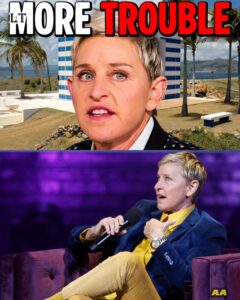

Hollywood ERUPTS As Celebrities Rush To Defend Ellen DeGeneres Amid Explosive Controversies
For years, Ellen DeGeneres represented one of the safest and most carefully protected images in Hollywood.
Her public identity was built on kindness. Smiling audiences. Dancing entrances. Emotional giveaways. Celebrity interviews filled with laughter.
Millions of viewers saw her as the friendly face of daytime television, the celebrity who made ordinary people feel seen while turning positivity into a global brand worth hundreds of millions of dollars.But the image that once looked untouchable eventually began cracking in public. At first, the controversy surrounding Ellen seemed limited to workplace allegations.
Former employees accused her show of fostering a toxic environment behind the scenes, describing fear, intimidation, and behavior that sharply contradicted the kindness brand that made her famous.
The backlash exploded online almost instantly. Social media users began revisiting old interviews, awkward celebrity moments, and rumors that had quietly circulated around Hollywood for years.
Then the internet took the story much further. Online discussions began blending Ellen’s controversy with larger conversations surrounding celebrity elites, Hollywood power structures, Jeffrey Epstein speculation, Sean “Diddy” Combs rumors, and questions about how entertainment insiders protect each other when scandals erupt.
Suddenly, Ellen’s name was no longer just tied to a toxic workplace controversy. It became attached to something much bigger — a growing public distrust toward celebrity culture itself.
And what shocked many people most was not only the criticism directed at Ellen. It was the number of powerful celebrities who immediately rushed to defend her.Kevin Hart became one of the first major stars to publicly stand by Ellen during the height of the backlash.
To many observers, the loyalty made sense. In 2019, Hart faced enormous controversy himself after old tweets resurfaced during discussions surrounding his planned role hosting the Academy Awards.
At the time, many celebrities avoided getting involved publicly. Ellen did the opposite. She invited Hart onto her show, supported him openly, and encouraged forgiveness.
So when Ellen became the target of internet outrage in 2020, Hart returned the favor.
He publicly praised her, calling her one of the “dopest people on the planet” while criticizing what he viewed as modern cancel culture and social media pile-ons.
According to Hart, Ellen had always treated him with kindness and respect behind the scenes.
But instead of calming the controversy, his comments fueled an even larger debate. Critics argued that celebrity experiences with Ellen did not erase the accusations made by employees.
In fact, many viewers claimed the situation perfectly demonstrated how differently powerful insiders experience Hollywood compared to ordinary workers.The more celebrities defended Ellen, the more some social media users became suspicious of Hollywood’s culture of mutual protection.
Then resurfaced interviews added gasoline to the fire. A clip from Kevin Hart’s Peacock series “Hart to Heart” suddenly spread across social media after viewers noticed an awkward exchange involving Kelly Clarkson discussing pressure within the entertainment industry.
Hart quickly attempted to steer the conversation away, leading internet users to speculate wildly about what celebrities supposedly avoid discussing publicly.
Those theories only intensified as more celebrities entered the conversation. Katy Perry also defended Ellen publicly, saying she had personally experienced nothing but kindness from her.
Once again, supporters viewed the statement as proof Ellen’s real personality differed from the public accusations.
Critics saw something completely different. To them, the defense represented Hollywood insiders protecting one another while ignoring workers who claimed they suffered behind the scenes.
Soon, even unrelated content connected to celebrities defending Ellen started going viral online. Social media users began dissecting Katy Perry’s music videos frame by frame, creating elaborate theories about hidden symbolism, celebrity culture, and supposed connections between Hollywood imagery and elite party rumors surrounding figures like Epstein and Diddy.Most of the claims circulating online lacked evidence, but that hardly slowed the internet’s obsession.
In the age of viral speculation, public suspicion spreads faster than facts. Jay Leno soon joined the growing list of celebrities standing beside Ellen.
The longtime late-night legend defended her publicly, saying he could not reconcile the allegations with the person he had known for decades.
Leno praised Ellen’s charity work and described her as generous and supportive within the comedy world.
He argued that public opinion had transformed into an overwhelming mob mentality where accusations instantly became accepted as truth before investigations finished.
Still, the damage to Ellen’s reputation continued growing. Viewers began rewatching old interviews differently. Moments once viewed as funny or harmless suddenly looked uncomfortable under a new lens.
Clips of Ellen interacting awkwardly with celebrities resurfaced constantly online, fueling endless debates about whether her friendly image had always been more performance than reality.
Steve Harvey also defended Ellen passionately. During an interview, Harvey insisted Ellen had always been kind and respectful toward him personally.He argued that no celebrity could fully control every producer or staff member working behind the scenes on a major television production.
Harvey also criticized cancel culture directly, warning that social media had created an environment where public figures could become targets almost overnight.
But while Harvey defended Ellen, internet speculation surrounding Hollywood elites continued spiraling into darker territory.
Social media users increasingly connected celebrity friendships, party photos, and old interviews to wider conspiracy theories involving Epstein, Diddy, secretive Hollywood circles, and hidden power networks.
Many claims spreading online remained unsupported by evidence, but the atmosphere of distrust surrounding celebrity culture had already become impossible to contain.
Ashton Kutcher’s defense of Ellen generated even more controversy. Kutcher publicly stated that both he and Mila Kunis had only experienced Ellen as respectful and generous behind the scenes.
However, online critics quickly redirected attention toward Kutcher himself due to renewed scrutiny surrounding his past friendship with Sean “Diddy” Combs and resurfaced discussions involving his anti-trafficking advocacy work.
Internet investigators began circulating old emails, heavily redacted documents, and speculative claims involving connections to figures surrounding Epstein and Ghislaine Maxwell.
None of these online theories directly proved criminal wrongdoing by Kutcher, but the viral nature of internet speculation ensured his name became deeply entangled in broader conversations about Hollywood elites and hidden relationships.
The pattern repeated constantly. Every celebrity who defended Ellen somehow became pulled into a larger internet narrative about fame, secrecy, image management, and the entertainment industry’s inner circles.
What began as a workplace controversy had transformed into something resembling a full-scale cultural reckoning about celebrity trust itself.
Jerry O’Connell attempted to bring the discussion back toward evidence and fairness. He publicly warned that online outrage was beginning to overpower actual investigations and facts.
O’Connell argued accusations deserved proper examination rather than instant public conviction. But by that stage, the internet conversation had evolved far beyond simple questions about workplace behavior.
Ellen eventually issued a public apology after WarnerMedia launched an internal investigation into allegations surrounding her show.
The apology became one of the defining moments of the controversy. While some viewers appreciated her acknowledgment of problems behind the scenes, others believed the statement arrived far too late.
Meanwhile, Ellen’s wife, Portia de Rossi, remained one of her strongest defenders throughout the storm.
Portia repeatedly posted messages supporting Ellen while criticizing what she viewed as unfair online attacks.
Supporters praised her loyalty. Critics argued family members naturally defend loved ones during public scandals regardless of the accusations involved.
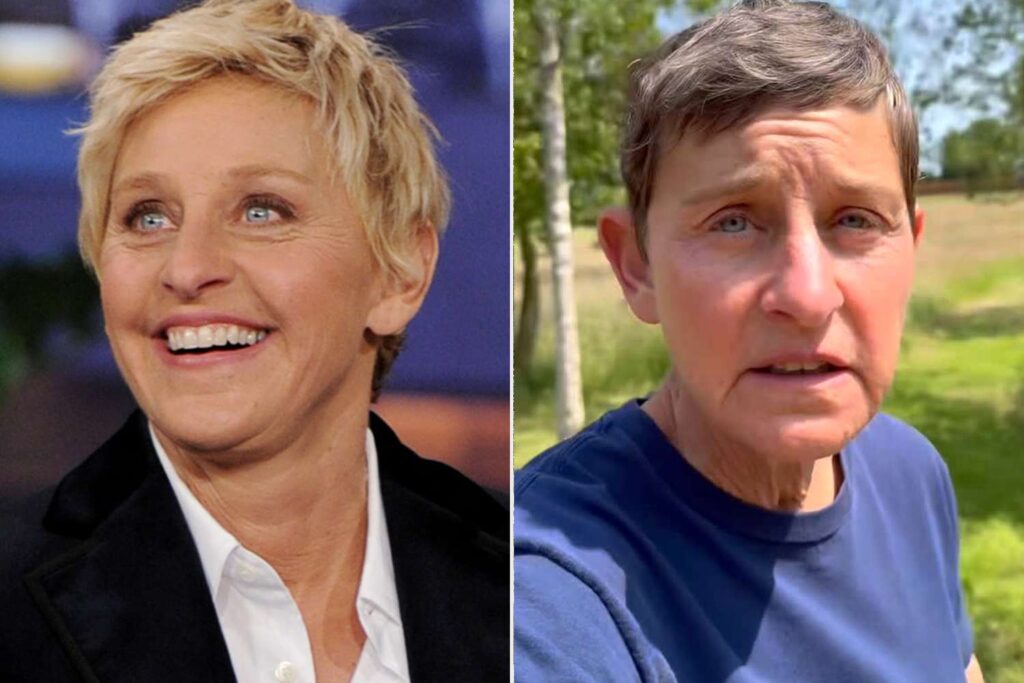
As Ellen stepped further away from the spotlight following the end of her show, the speculation intensified even more.
Social media rumors began linking Ellen’s name to Epstein-related discussions after internet users noticed her name appearing within broader investigative document indexes containing hundreds of high-profile public figures.
Experts repeatedly explained that appearing in large document indexes does not automatically imply criminal wrongdoing or direct association with crimes.
Still, online conspiracy culture treated every mention as explosive evidence. The result became a frenzy of distorted claims, manipulated images, and increasingly bizarre theories spreading across TikTok, YouTube, Reddit, and X.
At the same time, Alec Baldwin publicly defended Ellen during an emotional interview moment that quickly went viral.
Baldwin praised Ellen’s comedic talent and career while encouraging her not to quit despite the public backlash.
Ellen appeared visibly emotional during the exchange, admitting she was trying to navigate difficult “rapids” while continuing forward.
But outside Hollywood, public opinion kept shifting. For many viewers, the controversy surrounding Ellen became symbolic of a larger issue.
People increasingly questioned whether Hollywood’s friendliest public personalities were carefully constructed brands hiding far more complicated realities behind closed doors.
That conversation gained even more momentum after podcaster Joe Rogan openly discussed Ellen during an episode of “The Joe Rogan Experience.”
Rogan argued that many celebrities maintain highly manufactured public personas while behaving completely differently behind the scenes.
He mocked the contrast between Ellen’s cheerful television image and reports describing fearful workplace conditions backstage.
Rogan’s comments spread rapidly online because they connected directly to what many viewers already suspected.
The internet no longer trusted celebrity branding. Audiences who once accepted polished talk show personalities at face value had grown deeply skeptical of Hollywood image management.
Social media changed everything. Old clips never disappeared. Former employees suddenly had platforms. Anonymous stories spread globally overnight.
Fans started comparing public performances against behind-the-scenes allegations in real time. And Ellen DeGeneres became one of the clearest examples of that transformation.
The situation revealed something much larger than one celebrity controversy. It exposed how quickly modern audiences can turn against public figures once the illusion of authenticity begins collapsing.
For years, Ellen’s kindness brand felt nearly indestructible. Yet once viewers started questioning the performance itself, every interview, every joke, every awkward interaction became reinterpreted through a completely different lens.
Now the divide between Hollywood insiders and the public feels wider than ever. Inside the industry, many celebrities continue defending Ellen as generous, funny, and supportive.
Outside Hollywood, millions remain deeply suspicious of celebrity culture, believing fame often protects powerful figures from accountability until public pressure becomes impossible to ignore.
And perhaps that is why the Ellen controversy still fascinates the internet years later. Because underneath the gossip, the rumors, and the celebrity drama sits a deeper question audiences cannot stop asking:
How many other carefully crafted Hollywood personalities are hiding behind the exact same illusion? Once the public starts questioning the performance, the entire system suddenly looks very different.
And in today’s internet era, rebuilding trust may be harder than losing it in the first place.