
There is a specific phenomenon in the world of entertainment and pop culture where an icon, once thought to be completely untouchable and immune to the shifting tides of public opinion, suddenly falls from grace. This fall is rarely accompanied by a massive explosion or a singular, catastrophic scandal. More often than not, it is a slow, gradual erosion of authenticity that culminates in a singular moment of public exposure. For decades, Howard Stern stood as the undisputed King of All Media. He was the roaring lion of terrestrial radio, a fearless, untamed provocateur who built a massive media empire by gleefully tearing down the carefully constructed facades of Hollywood elites. He was the voice of the working class, the rebellious outsider who said the things no one else dared to say, racking up millions in Federal Communications Commission fines as a badge of honor.
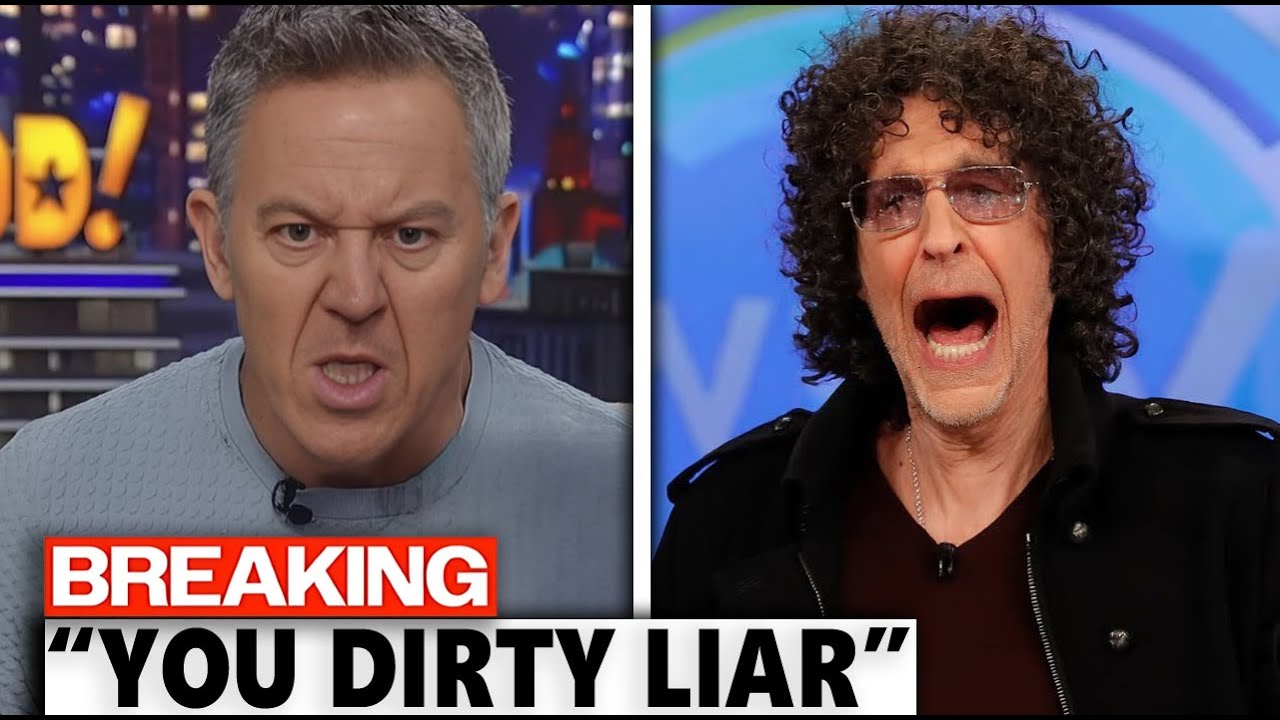
However, the cultural landscape has shifted drastically, and so has the man behind the microphone. In what can only be described as a cultural earthquake broadcast live on national television, Greg Gutfeld delivered a monologue that did more than just poke fun at a fellow broadcaster. It systematically dismantled Howard Stern’s entire modern persona, exposing a staggering level of hypocrisy and signaling a definitive changing of the guard in the realm of cultural commentary. This was not a petty celebrity feud filled with screaming matches and dramatic rebuttals. Instead, it was a quiet, surgical, and utterly devastating humiliation that left the once-unshakable king of shock radio exposed, cornered, and entirely silent. The implications of this televised takedown extend far beyond the two men involved; it represents a profound commentary on the death of the American shock jock, the seductive allure of elite acceptance, and the undeniable consequences of abandoning the very audience that built your throne.
When examining the footage of Greg Gutfeld’s precise dismantling of Howard Stern, the first thing that strikes the viewer is the complete absence of rage. There was no shouting, no performative anger, and no reliance on cheap, low-hanging insults. Gutfeld utilized a weapon far more lethal in the world of media: cold, hard, unvarnished truth wrapped in razor-sharp satire. He painted a vivid picture of a man who has traveled so far from his working-class, rebellious roots that you can no longer draw a straight line between the Howard Stern of 1995 and the Howard Stern of today.
Gutfeld pointed out the absurd reality of Stern’s current existence, contrasting the fiery provocateur of the past with the docile, approval-seeking celebrity interviewer of the present. The audience did not need to be convinced; they simply needed someone with a large enough platform to articulate what they had already been observing for years. Gutfeld acted as a mirror, reflecting the painful reality that Stern had morphed into the exact type of phony he used to ruthlessly destroy on his morning show. The tragedy of the situation was compounded by the fact that Stern, seemingly trapped in a bubble of wealth and sycophants, appeared to genuinely believe his transformation was a sign of maturity and evolution. He failed to realize that in his desperate attempt to be embraced by the establishment, he had traded his unparalleled cultural power for polite applause at cocktail parties. Gutfeld’s monologue was the pin that burst that carefully curated bubble, leaving nothing but the uncomfortable reality of a legendary broadcaster who had entirely lost his edge.
One of the most compelling and controversial arguments introduced during Gutfeld’s takedown was the concept of what he termed “Blackface Reparations,” or BFR. To understand the gravity of this accusation, one must look back at the foundation of Stern’s career. For decades, his radio program was a chaotic carnival of misogyny, racial humor, exploitation of the mentally ill, and relentless boundary-pushing. He capitalized on desperate individuals, orchestrated demoralizing stunts, and wore his offensiveness as a crown. However, in the modern era of intense cancel culture and unforgiving social media witch hunts, an archive like Stern’s is a ticking time bomb.
Gutfeld theorized that Stern’s abrupt pivot to becoming a champion of progressive, “woke” ideologies is not rooted in a genuine moral awakening, but rather in a desperate strategy for survival. By aggressively aligning himself with the very political and cultural forces that would typically destroy a career like his, Stern is effectively paying a form of cultural restitution. He hopes that by adopting the language and the causes of the progressive elite, the proverbial crocodile will eat him last. This pivot explains his sudden defense of hyper-sensitive topics and his breathless alignment with Hollywood’s prevailing political sentiments. However, as Gutfeld astutely pointed out, this strategy requires a complete sacrifice of authenticity. You cannot spend thirty years as the ultimate anti-establishment rogue and then seamlessly transition into a polished defender of the status quo without your audience noticing the jarring cognitive dissonance. Stern flipped from populist to elitist because he now exclusively surrounds himself with elitists, hoping his newfound allegiance will act as a shield against the inevitable reckoning of his past transgressions.
Nothing illustrated this drastic shift quite like the recent reports of Stern’s social calendar, which Gutfeld delightfully mocked on live television. The New York Post had recently reported that Stern was spotted at a chic, exclusive New York City restaurant dining with a crew of Hollywood A-listers, including Jennifer Aniston, Jimmy Kimmel, Jon Hamm, and Jason Bateman. In his prime, Stern would have mercilessly ridiculed any broadcaster caught participating in such a blatant display of elitist back-slapping. He would have torn apart the vanity, the exclusivity, and the sheer pretentiousness of the gathering. Today, he is the one holding court at the table.
What made the situation entirely unbearable for his long-time fans was Stern’s subsequent commentary on his own radio show, where he complained about how “exhausting” his luxurious lifestyle had become. To hear a man worth hundreds of millions of dollars, sitting in a state-of-the-art studio, whine about the fatigue of attending a five-star dinner with television stars is a spectacular display of tone-deafness. Gutfeld mercilessly capitalized on this, joking about the grueling, treacherous hike Stern must endure when walking from his climate-controlled wine cellar to his private tennis court. This was not just a joke; it was a devastating indictment of Stern’s absolute detachment from reality. He has forgotten what actual exhaustion feels like—the exhaustion of the blue-collar workers, the overnight shift laborers, and the everyday commuters who used to make up the core of his fiercely loyal fan base. By demanding sympathy for the burdens of immense wealth and privilege, Stern officially cemented his status as a Hollywood lapdog, entirely disconnected from the pulse of the American public.
If the dinner parties were a symptom of the disease, Stern’s recent interview with Vice President Kamala Harris was the terminal diagnosis. Longtime listeners tuned in hoping for a glimpse of the old magic—a challenging question, a subversive joke, or an unfiltered moment of honesty. Instead, they were treated to a breathless, fawning, and hopelessly shallow conversation that resembled a public relations infomercial more than a journalistic endeavor. Stern, the man who built an empire on making politicians sweat, was practically begging for approval.
Gutfeld highlighted one particularly embarrassing moment during the interview where Stern, attempting to express his unwavering support, told Harris, “I would also vote for that wall over there.” While Stern intended it as a compliment regarding his dedication to the Democratic ticket, Gutfeld brilliantly pointed out the unintentional insult: Stern had essentially compared the Vice President’s intellect to a slab of concrete. The fact that Stern was entirely oblivious to this blunder underscores his current lack of comedic sharpness. Furthermore, Stern’s demeanor during the interview was shockingly fragile. He admitted to being nervous, claiming he wanted the interview to go well not just for her, but for the country. Most alarmingly, he declared that the political climate is currently too important and too fragile for satire. Gutfeld seized upon this staggering hypocrisy. This is the same broadcaster who, mere days after the tragic Columbine massacre, made incredibly tasteless jokes about the victims. For that same man to now claim that the American political landscape is too delicate for a joke is a pendulum swing so extreme it induces whiplash. Stern has effectively sterilized his own comedic instincts to avoid offending his new political allies.
To fully grasp the extent of Stern’s detachment, one must also look at his behavior over the past few years, particularly his extreme reaction to the global pandemic. While millions of Americans were forced to navigate the terrifying realities of losing their jobs, keeping their small businesses afloat, and managing the chaos of everyday life, Stern retreated into absolute isolation. For nearly two years, he broadcasted from the safety of his $20 million beach house, completely cut off from the physical world.
During this time, his radio show frequently devolved into angry, epic screeds demanding mandatory vaccinations and insulting anyone who dared to question the policies of the establishment. He demanded that freedoms be stripped from those who did not comply, broadcasting a level of authoritarian paranoia that alienated a massive portion of his audience. Gutfeld used this prolonged isolation to explain Stern’s current state of delusion. When you spend years locked inside a luxury fortress, interacting only with a carefully vetted circle of assistants, celebrity friends, and yes-men, you inevitably lose touch with how the rest of the world operates. You forget the struggles of the working class. You become consumed by irrational fears—like Stern’s notorious germaphobia—and you begin to view the general public not as your peers, but as an unwashed, dangerous mass to be avoided at all costs. This self-imposed exile severely damaged Stern’s ability to relate to his audience, further accelerating his transition from an everyman hero to an out-of-touch elitist.
Perhaps the most shocking element of this entire saga was not what Greg Gutfeld said, but how Howard Stern responded. In the aftermath of such a brutal, viral, and universally praised takedown, the entertainment world waited with bated breath for Stern’s retaliation. Decades of precedent suggested that Stern would dedicate an entire week of programming to systematically destroying Gutfeld. He would have unleashed a torrent of fury, firing back with personal insults, aggressive mockery, and unrelenting anger. He would have burned down the metaphorical studio to defend his pride.
Instead, the response was a deafening, echoing silence. There was no bold monologue, no scathing clap back, and no signature rant. Stern simply sat in quiet, stunned surrender. This silence was more damaging than any insult Gutfeld could have hurled his way. It confirmed everything Gutfeld had said. Stern’s defenders desperately scrambled to spin the silence as a sign of maturity, claiming he had simply “evolved” past petty feuds. But the viewing public saw through the polished PR defense. It was not evolution; it was extinction. Stern remained quiet because he knew he had no ammunition. He is terrified of stepping back into the mud because doing so might jeopardize his standing with the Maya Rudolphs of the world, or cost him his invitation to the next A-list dinner party. He has become a man obsessed with reputation management, completely paralyzed by the fear of being mocked. The silence was the sound of a legacy cracking under the unbearable weight of comfort and conformity.

Nature abhors a vacuum, and the world of media is no different. As Howard Stern voluntarily retreated into the safe, sanitized halls of the Hollywood elite, he left behind a massive void for raw, unfiltered, and dangerous cultural commentary. The audience that propelled Stern to superstardom did not disappear; they simply went looking for a new champion. By dismantling Stern with such effortless precision, Greg Gutfeld did not just challenge the former king; he actively replaced him.
Gutfeld’s rise is essentially a mirror image of Stern’s fall. While Stern trades his edge for approval, Gutfeld continues to build an empire on the exact type of unapologetic boldness that Stern abandoned. Gutfeld is not afraid of the mob, he is not seeking validation from late-night television hosts, and he certainly isn’t complaining about the exhaustion of eating caviar with celebrities. He speaks with conviction, utilizing satire to slice through the suffocating political correctness of the modern era. The showdown on live television was not a battle between two equal forces; it was the definitive moment one era devoured another in real-time.
The history of television and radio is filled with moments that vanish as quickly as they occur. However, Greg Gutfeld’s destruction of Howard Stern’s modern persona is destined to carve itself into pop culture history like a permanent scar. It serves as a stark, uncompromising warning to any entertainer who attempts to outrun their past by adopting a synthetic, focus-group-tested identity. The public possesses an innate ability to detect inauthenticity, and they will never forgive a rebel who willingly puts on a leash.
Howard Stern may continue to broadcast, and he will undoubtedly continue to secure interviews with politicians and celebrities. But the illusion has been shattered. He is no longer the dangerous, unpredictable outsider that terrified the establishment; he is the establishment. He traded the terrifying thrill of the cultural battlefield for a comfortable seat at a very expensive table. Meanwhile, Greg Gutfeld stands at the microphone with the fire still burning, unafraid to strike. In the end, the world does not remember the men who whispered politely to protect their dinner reservations. They remember the men who were not afraid to shout the uncomfortable truths. On that definitive night, it was not Howard Stern who stood tall; it was the man who fearlessly exposed him, leaving a legacy forever altered in his wake.